Why Habit Trackers Fail (And How to Track Habits Long-Term)
You have done this before. You downloaded a habit tracker, spent 20 minutes setting it up, used it diligently for a week or two, and then quietly stopped opening it. The app is still on your phone, buried on the third screen. You feel vaguely guilty every time you notice it.
You are not alone. Research suggests that the vast majority of habit tracker users abandon their app within 60 days. The habit tracking industry has a dirty secret: the tools designed to build consistency are themselves used inconsistently.
But here is the thing most people get wrong — the problem is not you. The problem is the tracking model.
The Five Reasons Habit Trackers Fail
After looking at how people actually use tracking apps, a clear pattern emerges. The same five failure modes appear again and again, regardless of which app someone uses.
1. Streak Anxiety
This is the big one. Most habit trackers are built around streaks — consecutive days of completing a habit. The logic seems sound: build a chain, do not break it.
In practice, streaks create a psychological trap. The longer your streak grows, the higher the stakes. Missing a single day does not just break your chain — it erases all visible evidence of your effort. A 45-day streak resets to zero, and it feels like starting from nothing.
This is not a motivational tool. It is a source of anxiety. And when the streak inevitably breaks (because life is unpredictable), the emotional crash is often enough to make people quit entirely. Not quit the habit — quit tracking altogether.
💡 Loss aversion and streaks
The streak mechanic exploits loss aversion, a cognitive bias where losing something feels roughly twice as painful as gaining the equivalent. When your 30-day streak resets to zero, it does not feel like losing one day — it feels like losing thirty. This is why streak-based trackers have such high abandonment rates.
2. Too Many Items
The second failure mode is overcommitment. On day one, you are enthusiastic. You add 12 habits: exercise, meditate, read, journal, drink water, take vitamins, practise Spanish, call a friend, limit screen time, stretch, eat vegetables, go to bed on time.
By day three, your daily check-in takes ten minutes. By day seven, you are skipping items just to get through the list. By day fourteen, you stop opening the app because it feels like a second job.
The tracking itself has become a burden. When you are spending more energy managing your tracker than doing your habits, something has gone fundamentally wrong.
3. The Daily-Only Model
Most trackers assume every habit is daily. But real life does not work that way. You do not need to change your bedsheets every day, visit the dentist every day, or deep-clean the kitchen every day.
When a tracker only supports daily habits, it forces you to either ignore the things that matter on longer cycles or awkwardly mark them as "not applicable" day after day. Neither option works. The tracker becomes disconnected from your actual life, and a disconnected tool is an abandoned tool.
4. Boring Design
This one is underestimated. A habit tracker you open multiple times a day needs to be something you do not mind looking at. Most trackers look like spreadsheets — rows, columns, checkboxes, muted greys.
Functional? Yes. Forgettable? Also yes. When your tracker blends into the background of your phone like every other utility app, there is no pull to open it. No small moment of visual pleasure that reinforces the behaviour of checking in.
Beautiful design is not superficial. For a daily-use app, it is a retention strategy.
5. Complex Setup
The final failure mode happens before you even start tracking. Some apps require you to configure schedules, set goals, choose categories, define completion criteria, link habits to routines, and customise notification rules — all before you log a single thing.
By the time you have finished setting up, your motivation has been spent on configuration rather than action. And if the setup does not feel "right," you might tweak it endlessly rather than actually using it.
The Alternative Model: Days-Since Tracking
Each of the five failure modes above points to a flaw in the traditional tracking model. The good news is that an alternative exists — one that addresses every single one.
Days-since tracking replaces the "did I do it today?" checkbox with a simpler question: "how long has it been?"
Here is how it fixes each failure mode:
No streaks to break
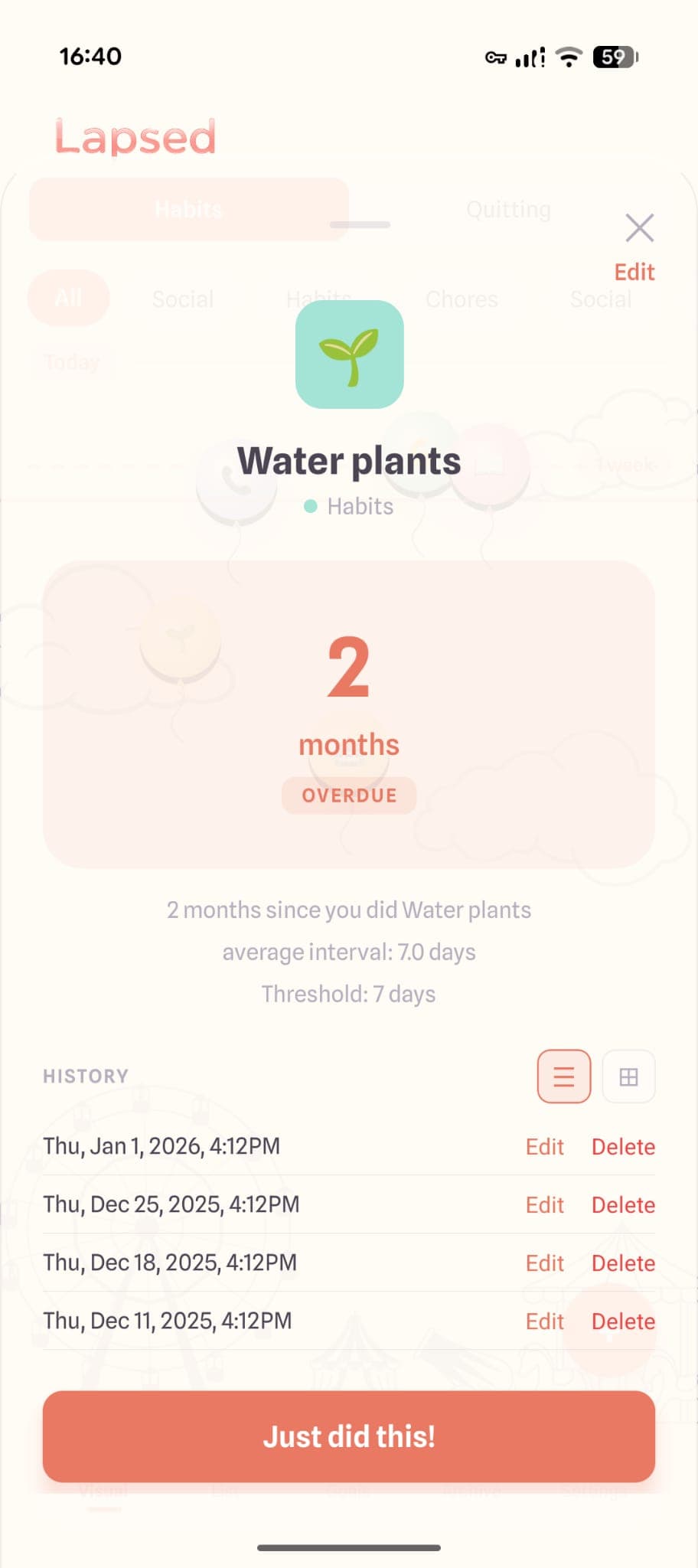
Days-since tracking shows elapsed time, not consecutive completions. There is nothing to reset. Log your habit after a gap and the counter simply updates — your history is preserved, not erased.
Any frequency works
A days-since tracker handles daily, weekly, monthly, and yearly items equally. Track your morning run alongside your annual boiler service without forcing everything into a daily grid.
Thresholds replace streaks
Instead of counting consecutive days, set a threshold — the interval at which you want to do something. The tracker gently signals when you are approaching or past that threshold. No punishment, just awareness.
One tap to log
The simplest implementation of days-since tracking requires exactly one interaction: tap the item when you do it. No checkboxes, no forms, no partial completions to configure.
A tracker built for how life actually works
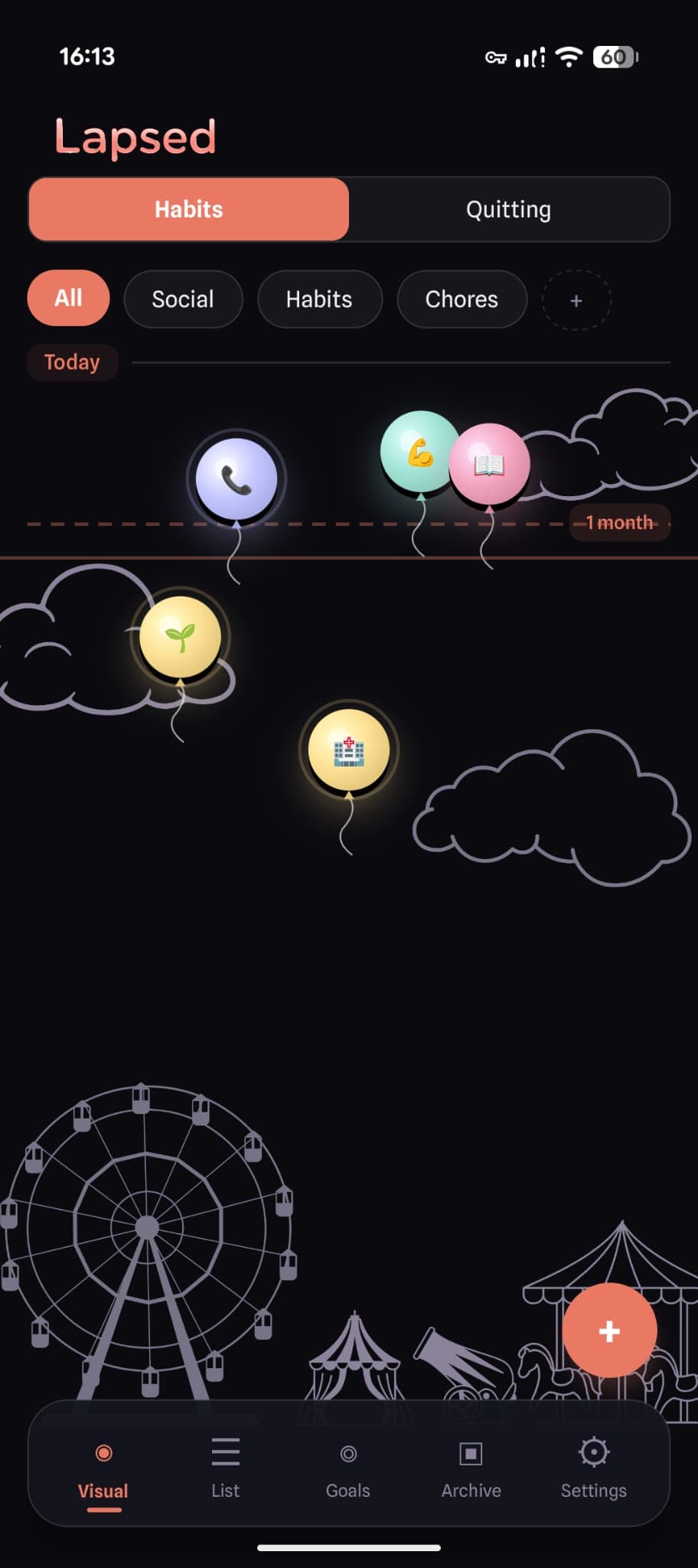
Lapsed uses the days-since model with visual canvases, thresholds, and one-tap logging. No streaks to break. No guilt.
How to Track Habits Long-Term
Understanding why trackers fail is half the battle. Here is how to set yourself up for tracking that actually lasts.
Start with five items or fewer. Resist the urge to track everything on day one. Pick the handful of things that genuinely matter to you right now. You can always add more later. A focused list beats an ambitious one.
Mix your frequencies. Not everything needs to be daily. Include some weekly and monthly items. This keeps your tracker feeling relevant across different timescales and avoids the "daily checklist fatigue" that kills engagement.
Choose a tracker you enjoy opening. This sounds trivial, but it is arguably the most important factor. If the app is visually engaging — something with a visual canvas rather than a plain list — you are more likely to check in regularly. The best way to track habits is with a tool that does not feel like work.
Use thresholds, not streaks. A threshold says "I want to do this every 3 days" rather than "I must do this every single day." The difference is subtle but profound. Thresholds allow for natural variation without triggering the shame spiral that streak-based trackers create.
Accept imperfection. The goal of tracking is awareness, not perfection. A tracker that shows you "it has been 12 days since you last exercised" is giving you useful information. A tracker that shows you "streak: 0 days" is giving you a reason to feel bad. Choose the model that provides information over judgement.
The Tracker That Works Is the One You Use
This is the uncomfortable truth at the heart of every "best habit tracker" article: no app can build your habits for you. What an app can do is remove friction, provide gentle awareness, and stay out of your way.
The habit tracking model matters far more than any individual feature. A simple, visual, days-since approach eliminates the failure modes that cause most people to abandon their tracker. No streak anxiety. No daily-only limitation. No complex setup. No boring design.
If your current tracker is gathering dust, the answer is probably not "try harder." The answer is to try a different model entirely.
Lapsed was built around this idea — that tracking should be gentle, visual, and simple enough that you actually do it. One tap to log. Thresholds instead of streaks. A canvas that makes elapsed time intuitive rather than anxiety-inducing.
The best habit tracker is not the one with the most features. It is the one that is still on your home screen six months from now.
Stop abandoning trackers
Lapsed is designed to be the last tracker you download. Visual, simple, and built around a model that works long-term.
Written by Lapsed
The beautiful days since tracker. Track your life visually.
Related Articles
Why an Aesthetic Habit Tracker Actually Works Better: Beauty as a Feature
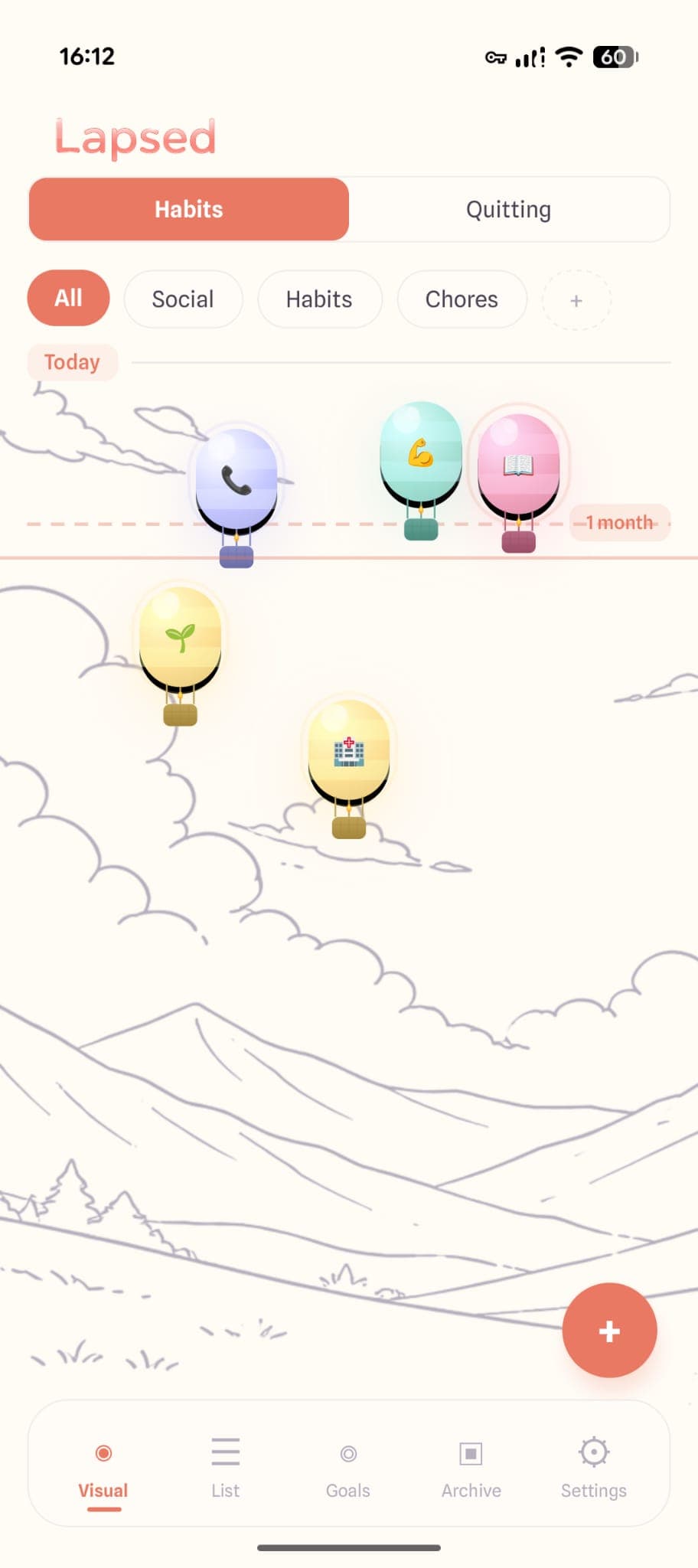
Most habit trackers are ugly and forgettable. An aesthetic tracker with glassmorphism, spatial UI, and calm colours changes your relationship with tracking entirely. Here is why design matters more than features.
Days Since Tracker for Android: Lapsed Finally Brings Visual Tracking to Google Play
Android users finally have a proper days since tracker. Lapsed brings its visual canvas, threshold lines, and category system to Google Play — here is what makes it different from Day Counter and other Android options.
Days Since Tracker for Couples: Be More Intentional About Your Relationship
Use a days-since tracker to stay intentional about date nights, quality time, and thoughtful gestures. Not a couples app — a personal tool that helps you notice when you are drifting.