How to Remember When You Last Did Something: The Simple App Solution
When did you last change your toothbrush? Replace the water filter? Get your eyes tested? Call your grandmother?
If you are like most people, you have no idea. These are not daily habits — they are periodic tasks with no natural reminder system. You do them, life moves on, and three months later you are standing in the bathroom thinking "has it been two months or six?"
This is not a memory problem. It is a tracking problem. And it has a surprisingly simple solution.
The Invisible Tasks Problem
Your brain is excellent at remembering things that happen on a fixed schedule. Monday meetings, daily medication, weekly bin collection — these have external triggers that keep them in your awareness.
But irregular tasks have no trigger. They happen when you remember, and you remember when something goes wrong:
- You notice the water tastes odd → the filter is months overdue
- Your dentist asks when your last visit was → you genuinely cannot remember
- A friend mentions they have not heard from you in ages → guilt
These tasks are not urgent enough to put in a calendar. They are not frequent enough to become habitual. They exist in a blind spot between "too important to ignore" and "too infrequent to remember."
💡 The forgetting curve is steep
Research shows that within 24 hours, people forget approximately 70% of newly learned information. For one-off events like "I changed the air filter on Tuesday," that memory is essentially gone within a week unless something reinforces it.
Why Calendars and To-Do Lists Fail
The obvious solution is "just put it in your calendar." But periodic tasks do not work well in calendars for three reasons:
- You do not know the exact future date. When you change your water filter, you would need to calculate the next change date and create a calendar event. Most people do not do this.
- Calendars are for appointments. Mixing "dentist on Thursday" with "change toothbrush sometime in the next few weeks" clutters the calendar with different types of information.
- To-do lists lack time context. A to-do item says "change water filter" but does not tell you how long it has been. Is it overdue or just on your list?
What you actually need is the answer to one simple question: how long has it been since I last did this?
The "When Did I Last" Approach
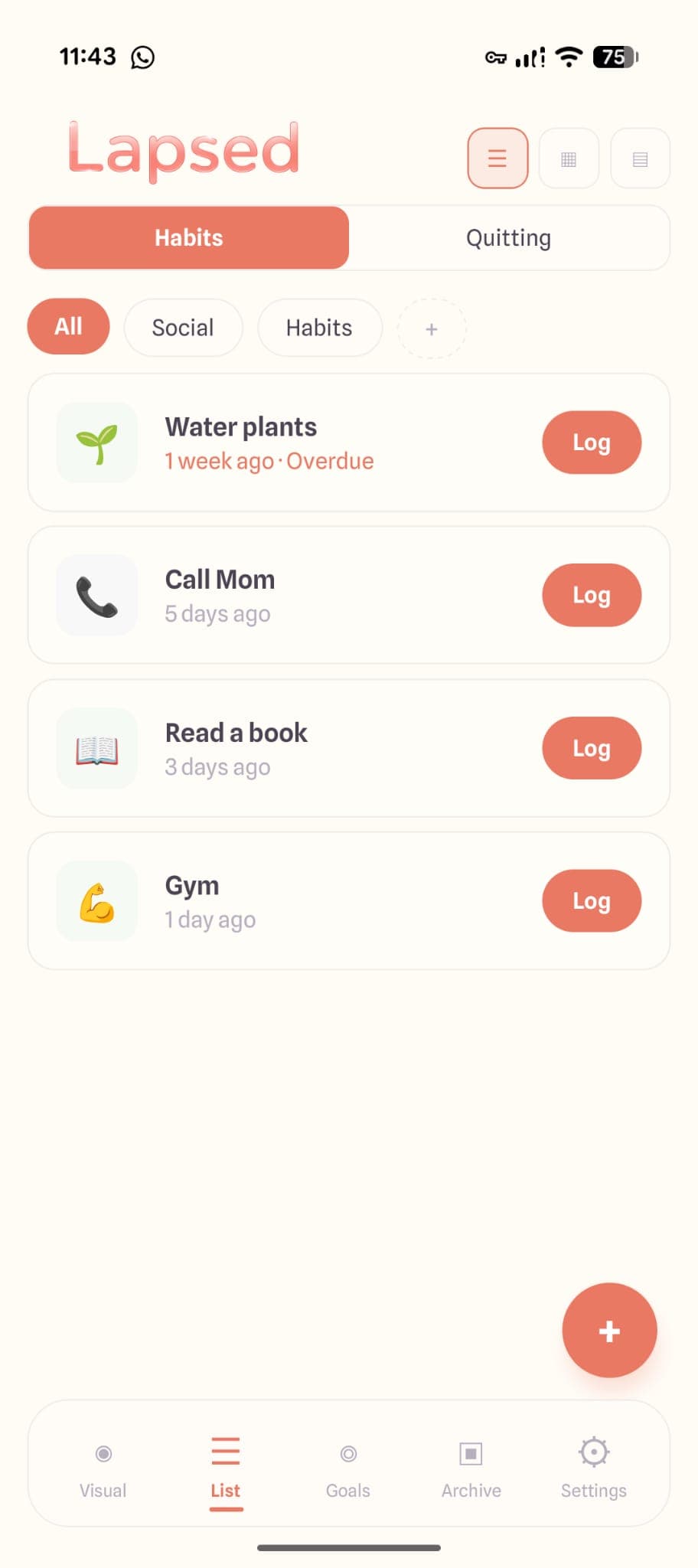
A days-since tracker flips the model. Instead of planning when to do something next, you simply log when you do it. The tracker then shows you how long it has been.
This is powerful because:
- Logging takes two seconds. Tap the item when you do it. Done.
- The passage of time does the reminding. When the number gets high enough, you know it is time.
- You build a history automatically. Over time, you can see your natural rhythm for each task.
Things Worth Tracking This Way
Here are tasks that are perfect for a "when did I last" tracker:
Home Maintenance
- Air filter replacement (every 1-3 months)
- Gutter cleaning (every 6 months)
- Smoke alarm battery check (every 6 months)
- Deep clean of fridge/oven (monthly)
- Water filter replacement (every 2-3 months)
Health
- Eye test (every 1-2 years)
- Dentist visit (every 6 months)
- Blood test or health check (yearly)
- Replacing toothbrush (every 3 months)
- Skin check (yearly)
Social
- Called parents or grandparents
- Caught up with a specific friend
- Date night with partner
- Visited family
- Sent a thank-you note
Car and Possessions
- Oil change (every 6 months or 5,000 miles)
- Tyre pressure check (monthly)
- Car wash
- Mattress rotation (every 3-6 months)
- Backup phone/computer (monthly)
Pet Care
- Flea treatment (monthly)
- Worming tablet (every 3 months)
- Vet check-up (yearly)
- Grooming appointment
- Nail trimming
✨ Set thresholds for each task
The magic happens when you combine "how long since" with a threshold. Set your water filter to 60 days, your dentist to 180 days, and calling your mum to 7 days. The tracker then shows you at a glance what is overdue and what is fine — without you doing any mental maths.
How Lapsed Makes This Effortless
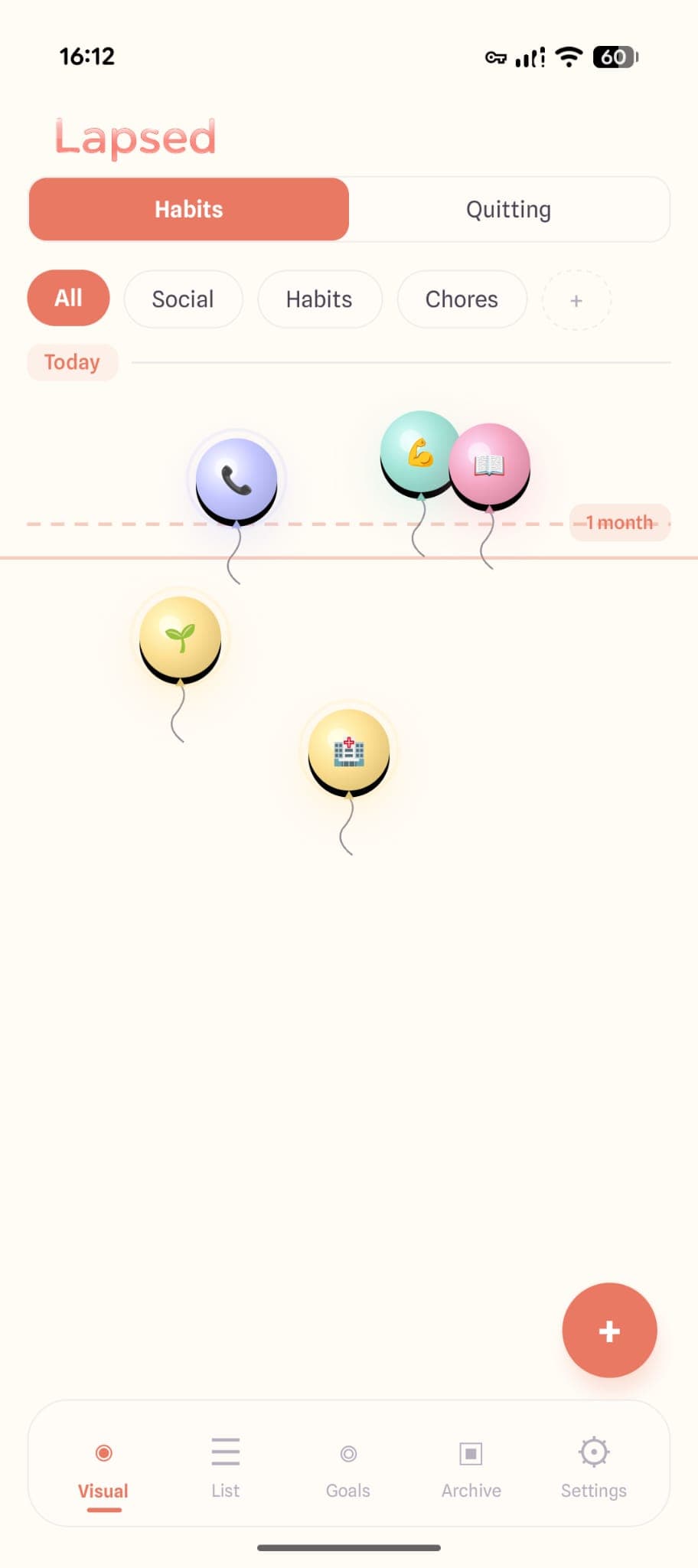
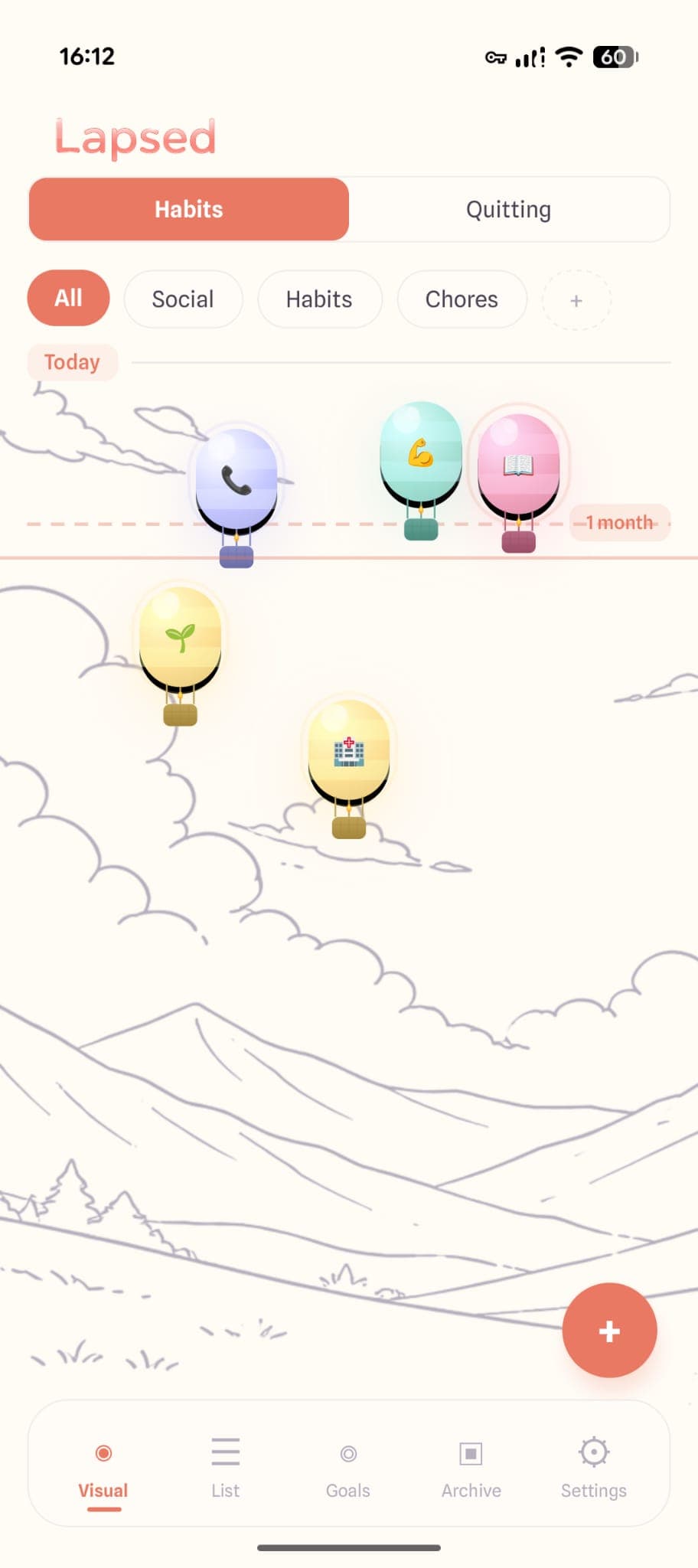
Lapsed is built exactly for this use case. Every item you add shows as a floating dot, balloon, or hot air balloon on a visual canvas. Items that are recent stay close to today. Items you have not done in a while drift further away.
Set a threshold and you can instantly see what needs attention — items past their threshold are visually distinct. No need to read numbers or do calculations. Just glance at the canvas and you know.
The best part: you do not need to form a habit. You are not trying to do these things daily. You just log them when they happen, and the app handles the rest.
Never forget when you last did something
Lapsed tracks how long it has been since anything — home tasks, health appointments, social catch-ups, and more. Just log it and let time do the rest.
Read about 10 things worth tracking with a days since counter or learn how a visual tracker makes time tangible.
Stop trying to remember
A beautiful visual tracker for everything periodic in your life. Log once, see the time passing, and act when it matters.
Written by Lapsed
The beautiful days since tracker. Track your life visually.
Related Articles
When Did I Last...? The App That Answers Life's Most Forgotten Question
When did I last go to the dentist? Call mum? Change the sheets? A 'when did I last' tracker helps you stay on top of periodic tasks you keep forgetting. Here's how.
10 Things You Should Track How Long It Has Been Since
From the last time you called a friend to your last oil change — here are ten things worth tracking with a days since counter app, with tips on setting the right thresholds.
Why an Aesthetic Habit Tracker Actually Works Better: Beauty as a Feature
Most habit trackers are ugly and forgettable. An aesthetic tracker with glassmorphism, spatial UI, and calm colours changes your relationship with tracking entirely. Here is why design matters more than features.